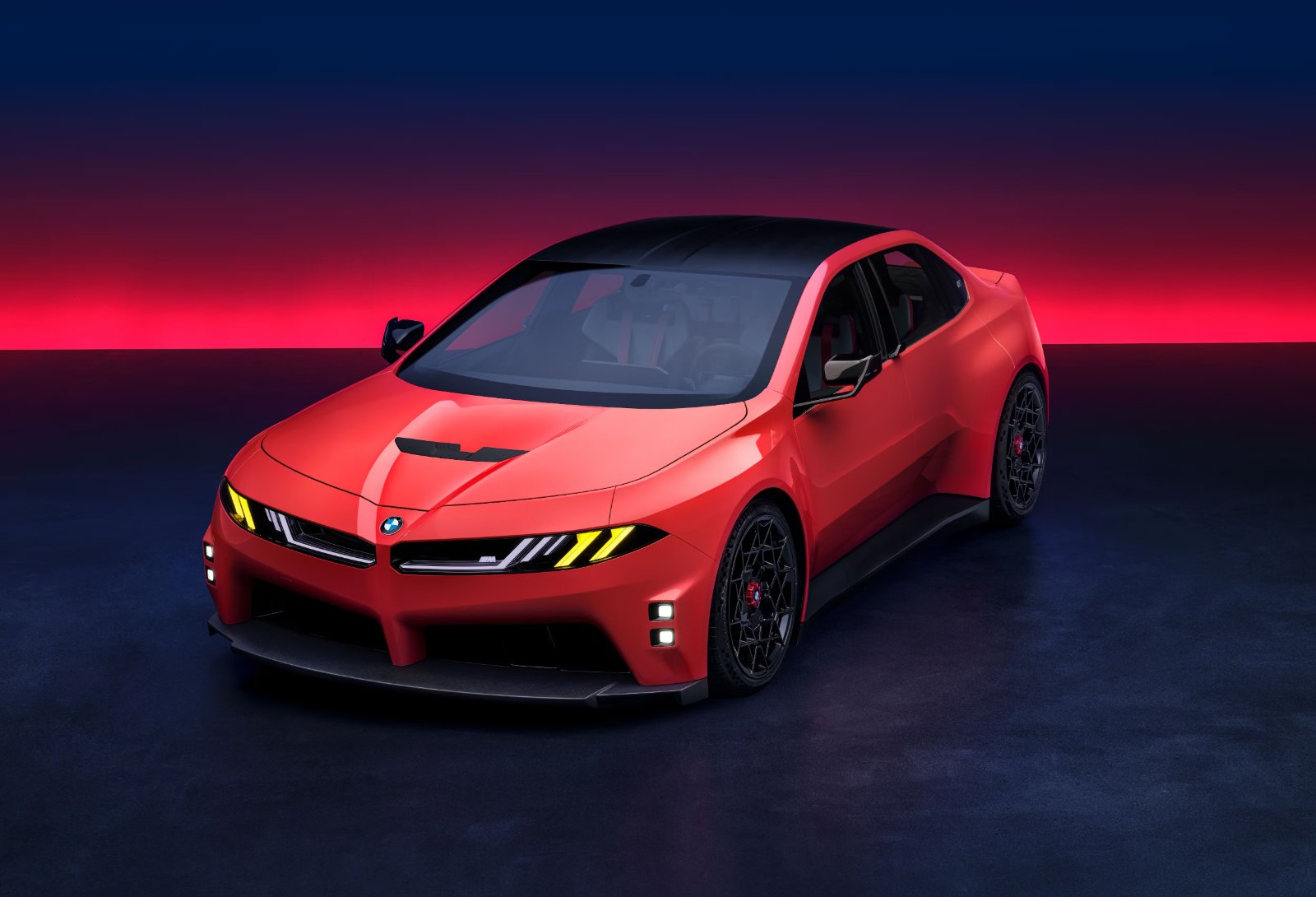
For decades the BMW M3 has been the benchmark that every other sports sedan gets measured against. So when BMW pulls the covers off a concept that previews the next one, people pay attention. At the 2026 24 Hours of Le Mans, BMW did exactly that, revealing the M Concept Neue Klasse on 12 June, a thinly disguised look at the first all-electric M3.
BMW officially called it a preview of the new design language for its high-performance cars and a clear signal of the brand's all-electric future. Behind the careful wording, the industry read it plainly: this is the electric M3, dressed up as a concept for a Le Mans weekend reveal. Several outlets have already nicknamed it the iM3, even though M division boss Frank van Meel has long resisted putting an "i" badge on an M car.
But the bigger story is not just that the M3 is going electric. It is that BMW is refusing to pick a single lane. Alongside the EV, the company is keeping a petrol M3 alive. The next M3 will not be a straight replacement for the current car. It will be a more ambitious, more complicated machine that tries to modernize an icon without throwing away what made it special.
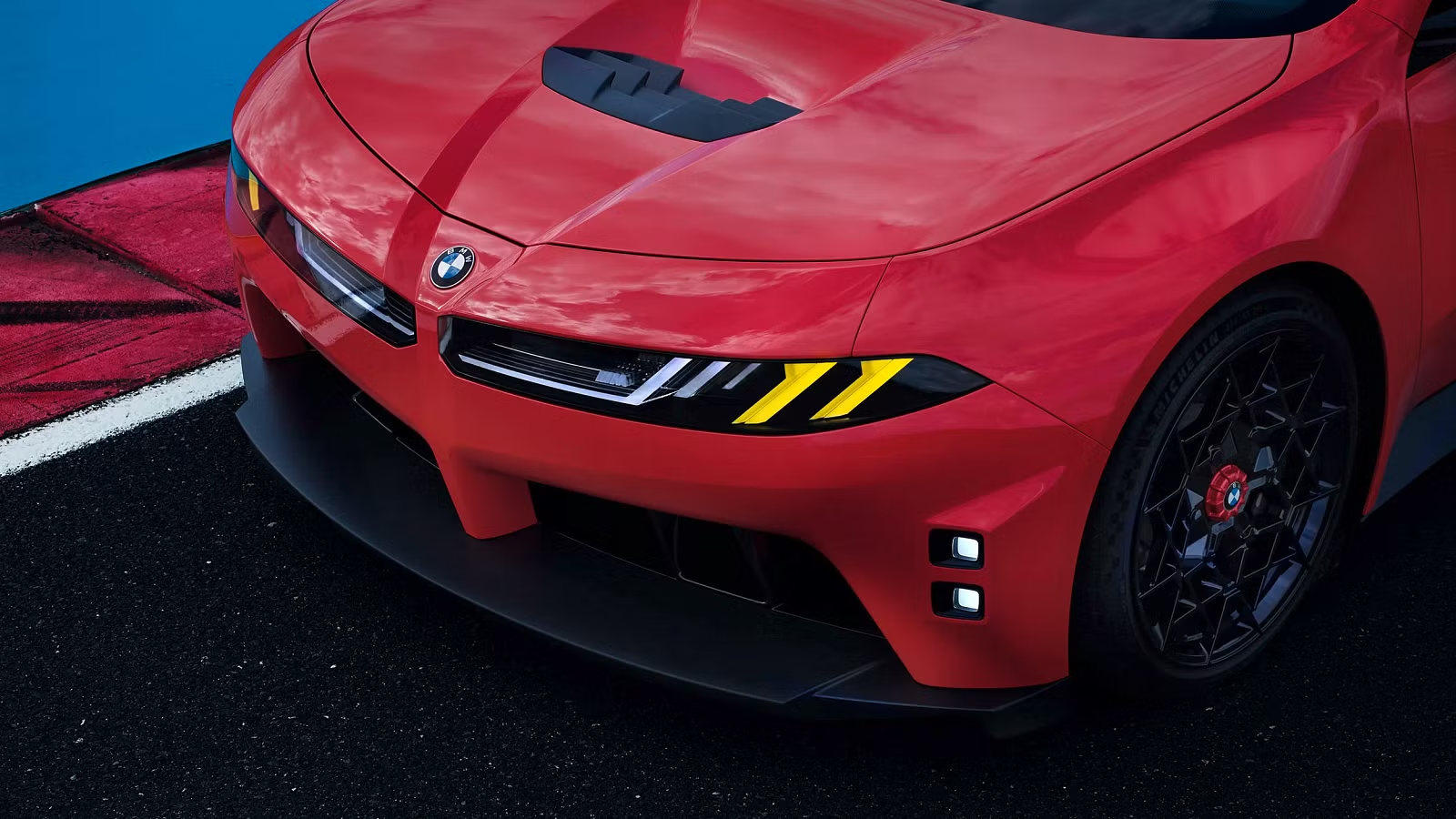
The four-stripe daytime running lights are coloured yellow to reference BMW's Le Mans GT and hypercar racing machinery, and will be a "new signature feature of future BMW M automobiles".
Key takeaways
The M Concept Neue Klasse, revealed at Le Mans on 12 June 2026, previews the first fully electric BMW M3.
It uses a quad-motor setup, one motor per wheel, on the new Neue Klasse platform with 800-volt hardware and a battery of more than 100 kWh.
Power is unconfirmed, but estimates range from roughly 700 to 1,000 hp, with a theoretical quad-motor ceiling cited as high as about 1,341 bhp.
A petrol M3 will continue alongside the EV, using a mild-hybrid inline-six with BMW's new M Ignite combustion technology.
The design previews a new look for all future M cars, including signature M Yellow lights and a shark-nose front end, with clear nods to the classic E30 M3.
Expect the production electric M3 to be revealed around 2027, with sales likely following into 2027 to 2028. Final power, pricing, and body styles are not yet confirmed.
Two M3s, one badge: why the dual approach matters
The headline decision here is strategic, not just mechanical. Rather than forcing every M3 buyer onto a single path, BMW is preparing both an electric M3 and a petrol M3 at the same time.
That matters for a few reasons:
It gives buyers a genuine choice. Traditional enthusiasts who still want a combustion engine are not being pushed out, while drivers ready for an EV get a true M-badged electric car.
It protects the M3 name. By keeping both alive, BMW keeps the M3 relevant to two very different audiences instead of alienating one of them.
It hedges BMW's bets. At a time when several rivals are pulling back on electrification, BMW is leaning in, and offering both lets it respond to whichever way the market actually moves.
It is worth remembering that BMW has sold M-flavored EVs since the i4 M50 arrived in 2021, but a full-fledged M car with no combustion engine has been missing until now. The result is that the M3 stops being one car and becomes a small family that shares a name and a mission.
A new design direction
The M Concept Neue Klasse is not just a powertrain preview. BMW openly describes it as a preview of the design language for future high-performance M cars, so the styling cues here will ripple across the lineup.
Key design pointers from the concept:
A cleaner, sharper front end. The shark nose integrates the kidney grille and headlights into a single unit, a tidier arrangement than the busy face of today's M3, sitting above a V-shaped bonnet with a large air outlet.
Signature M Yellow lights. New yellow lighting front and rear is confirmed as a defining element for future BMW M road cars, with three-dimensional Track Lights that nod to the BMW M Hybrid V8 Le Mans racer.
Serious aero and stance. Widened wheel arches, a muscular shoulder line, a split ducktail spoiler, a prominent front splitter, a diffuser, a likely carbon-fibre roof, and a trimaran-style three-part front bumper inspired by high-speed sailing boats.
A fresh colour and green materials. BMW introduced a new Monza Red finish, and worked natural-fibre materials into several of the aerodynamic components.
Function in the grille. Because there is no engine to feed, the large front opening exists to cool the quad motors and battery pack.
Heritage on display. BMW parked the concept next to the legendary E30 M3 for its reveal photos, a deliberate signal that this car is the spiritual heir to the original, boxy arches and aggressive stance included.
The overall effect is a car that looks both futuristic and rooted in BMW's performance past, and one that reviewers say sits much closer to the real production model than the more extreme Vision Driving Experience prototype that came before it.
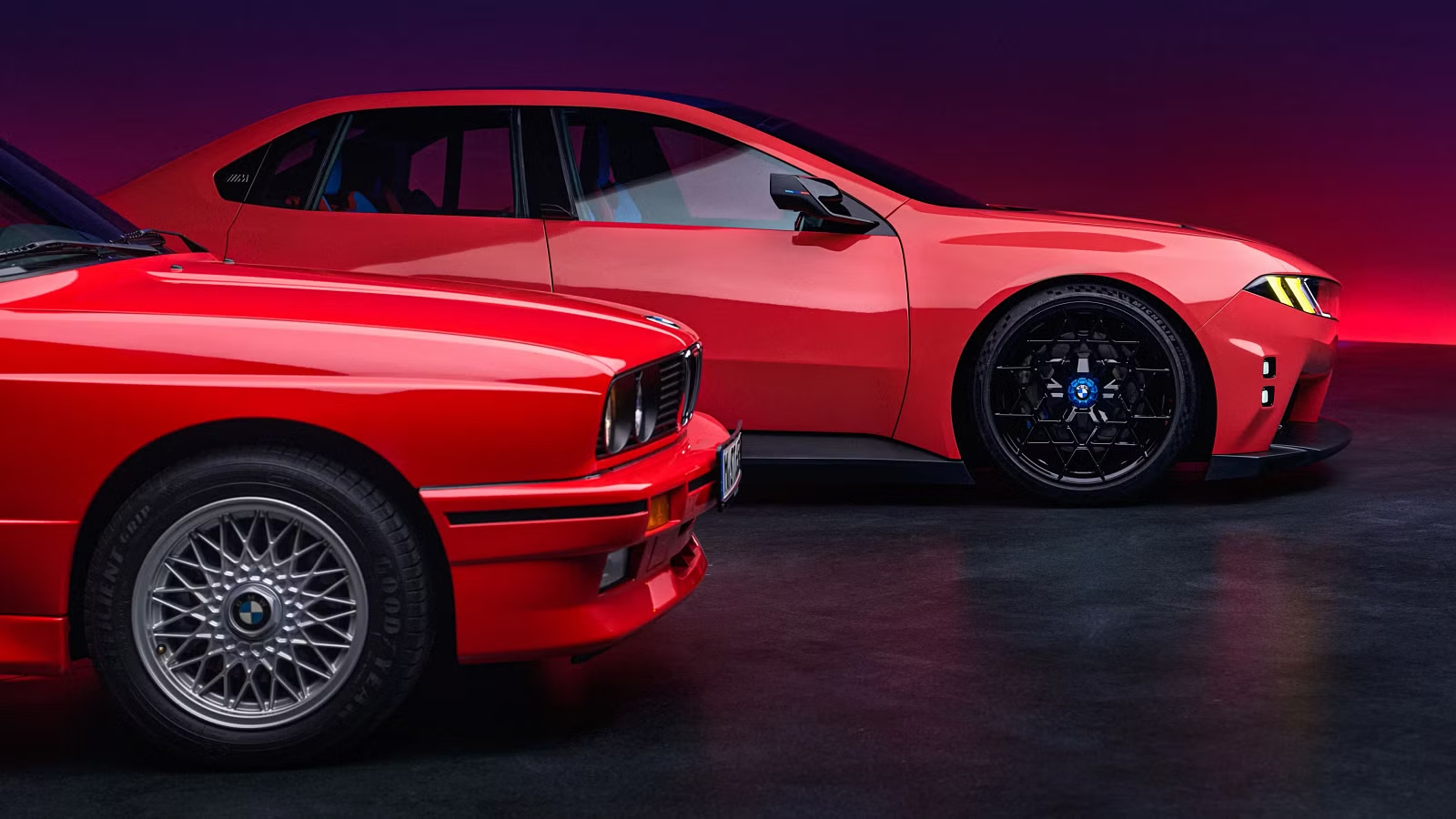
Old meets new: the classic E30 M3, with its cross-spoke wheels and round headlights, beside the M Concept Neue Klasse and its yellow M lights. BMW staged the pairing to underline the lineage.
Under the skin: the electric M3
This is where the concept gets genuinely radical. Instead of a single engine, the electric M3 uses BMW's new M eDrive system with four electric motors, one at each wheel, built on the Neue Klasse Gen6 foundation but developed specifically for electric M models.
What that setup delivers:
Total control over the car's behavior. With an individual motor at each corner, the car can send exactly the right amount of power to the wheel that can use it best, which transforms traction, torque vectoring, and cornering precision.
Rear-drive character on demand. According to Motor1, the front axle can be decoupled so the car behaves like a rear-wheel-drive M3, or to improve efficiency on longer drives.
Big battery, fast architecture. Reports point to a bespoke battery of more than 100 kWh, M-specific cells, and 800-volt hardware for quicker charging and better high-performance consistency.
A wide power range. BMW has not confirmed output. Estimates sit anywhere from around 700 to 1,000 hp, and the company has previously cited a theoretical quad-motor peak of roughly 1,341 bhp, although the production car will use a far more sensible figure.
Tying all of this together is a piece of software as important as the hardware. BMW uses a central control unit it calls the Heart of Joy, first demonstrated in the wild Vision Driving Experience prototype. It manages drivetrain and chassis responses together and processes data far faster than current systems, which is how BMW hopes to carry its trademark rear-drive feel into the EV era and make a four-motor car feel like a real M rather than a fast appliance.
The petrol M3 lives on
Here is the part that will reassure the purists. BMW is not ready to drop combustion from the M3 just yet.
The petrol M3 will continue with:
A revised 3.0-litre twin-turbo inline-six, the engine layout that has defined the modern M3.
Mild-hybrid assistance rather than a plug-in system, keeping things light and responsive.
New M Ignite combustion technology. According to Drivespark, BMW's M Ignite pre-chamber combustion tech, developed for Euro 7 rules, is being added to all straight-six M cars in 2026.
A small power bump. Output is expected to land marginally above the current M3 Competition's 523 bhp and 650 Nm, though BMW has not confirmed whether it keeps the existing S58 engine, switches to the B58, or moves to an entirely new unit.
In other words, the inline-six is not just surviving, it is being upgraded.
Interior and tech
Inside, the concept signals a clean break from the traditional M cockpit while trying to keep the drama intact.
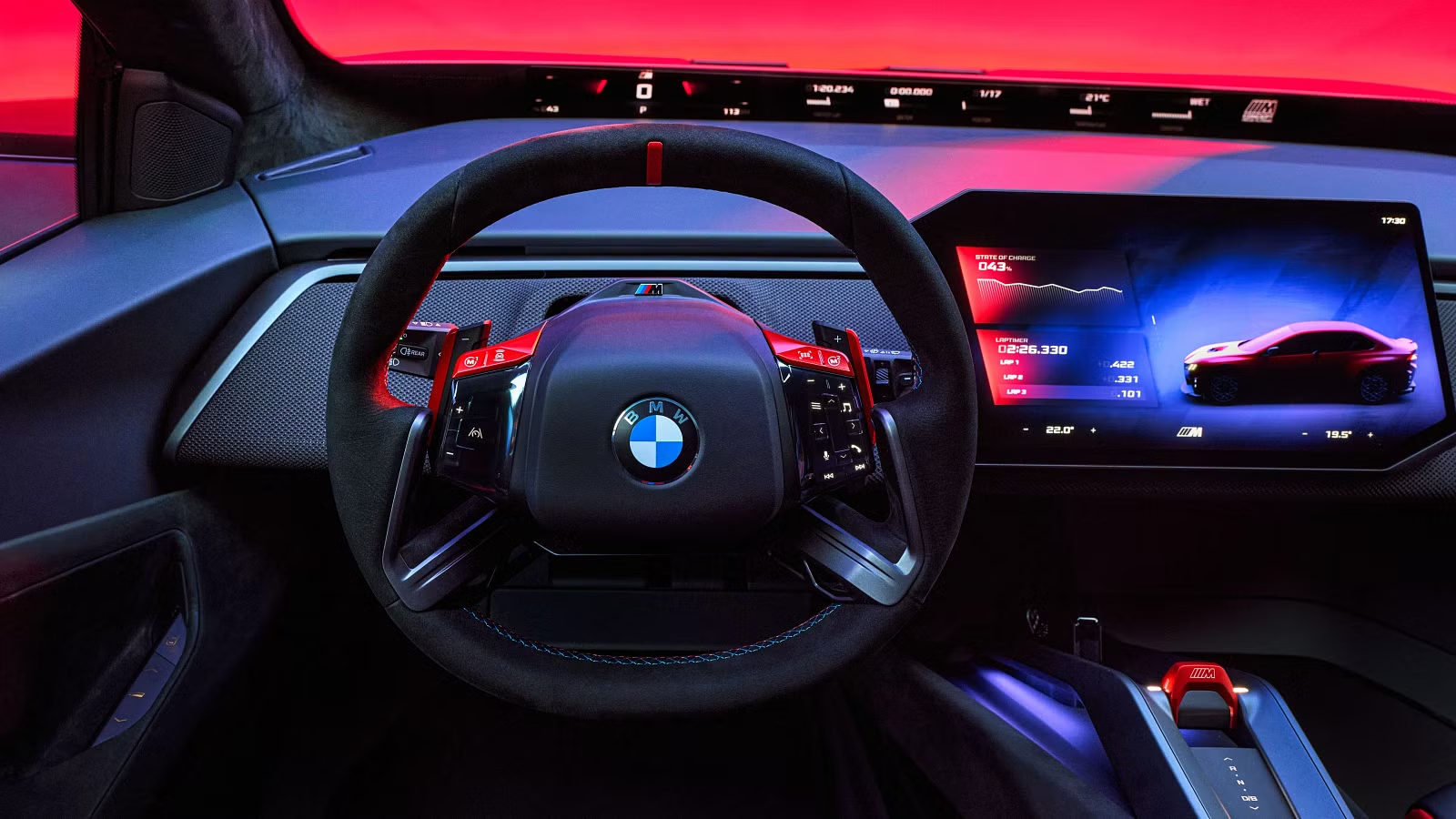
The cockpit pairs a squared-off M steering wheel and red shift paddles with a pillar-to-pillar display band and a large central touchscreen showing lap timing and state of charge.
Cabin highlights:
A pillar-to-pillar display. The concept ditches the conventional instrument cluster for a floating dashboard topped by a narrow band of displays stretching almost the full width of the cabin, with a large central touchscreen above the console.
M mode buttons and paddles. Steering-wheel M1 and M2 mode buttons return, and the EV even gets paddles for simulated gear shifts, a clear attempt to preserve the theatre people expect from an M car.
Sustainable, race-inspired materials. The cabin leans into natural-fibre components, black nubuck leather, and race-style bucket seats, mixing a motorsport feel with BMW's push toward lighter, lower-carbon materials.
The message is that going electric does not have to mean going sterile.
What to expect next
A few important caveats before anyone gets too excited:
This is still a concept. Much of what you see will reach production, but some of the more extreme touches will be toned down.
The timeline is not immediate. The standard Neue Klasse 3 Series arrives later in 2026. The electric M3 is expected to be revealed around 2027, with sales likely following into 2027 to 2028 depending on the source.
Key numbers are unconfirmed. Final power figures, pricing, and the exact range of body styles have not been officially announced.
Why this matters
Step back and the M Concept Neue Klasse is really a statement of intent. BMW is betting that it can carry the M3's identity, sharp handling, rear-drive feel, and a sense of occasion, into the electric era without losing the enthusiasts who built the badge's reputation in the first place.
By keeping a petrol M3 on sale at the same time, BMW is buying itself room to get the electric one right. As one reviewer put it, the electric M3 still has to prove it can deliver the feel people expect from an M car, but the four-motor setup gives it a strong technical foundation. The next M3 will be part heritage, part technology showcase, and very much a preview of where BMW M wants to go next.
Frequently asked questions
Is the BMW M3 going fully electric? Not entirely. BMW is preparing an electric M3 on the Neue Klasse platform, but it is keeping a petrol M3 with a mild-hybrid inline-six alongside it, so buyers will have a choice.
When will the electric BMW M3 arrive? The concept appeared in June 2026, the standard Neue Klasse 3 Series follows later in 2026, and the production electric M3 is expected to be revealed around 2027, with sales likely in the 2027 to 2028 window.
How powerful is the electric M3? BMW has not confirmed output. Estimates range from roughly 700 to 1,000 hp from its four-motor system, and BMW has cited a theoretical peak as high as about 1,341 bhp, though the production car will use a more realistic figure.
Will the petrol M3 still use an inline-six? Yes. The petrol M3 keeps a twin-turbo 3.0-litre inline-six, now with mild-hybrid help and BMW's new M Ignite combustion technology, with output expected slightly above today's M3 Competition.
What is the Heart of Joy? It is BMW's new central control unit that manages the car's drivetrain and chassis together and processes data much faster than current systems, which is central to making a four-motor EV feel like a true M car.
All images are of the BMW M Concept Neue Klasse courtesy of BMW