

Tellacity Article
As AI and search engines shifts to direct answers, online credibility is more important than ever to remain visible, trusted, & competitive
Published June 10, 2026

For about twenty years, the internet worked in a fairly predictable line. Someone searched, they landed on a website, and if the website did its job, they converted. Search, then website, then conversion. Whole industries were built on ranking at the top of that first step.
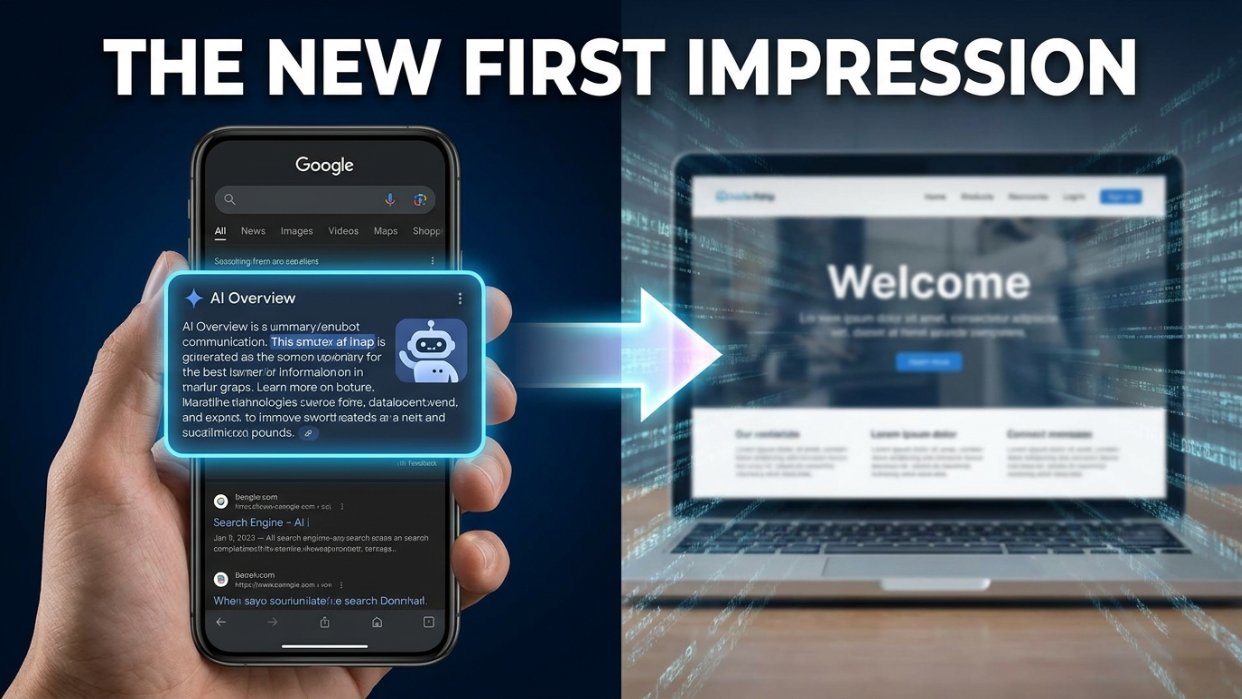
That line is being redrawn. More and more, the path now looks like this: someone asks a question, an AI gives them an answer, and they make a decision, often without visiting a single website. Question, then answer, then decision.
You can see it in the way people phrase things now. They aren't typing keywords and scrolling through ten blue links. They're asking full questions and expecting a straight reply:
"What's the best insurance company in America?"
"Can I trust this online store?"
"Which accounting software is the easiest to use?"
"What do customers actually think about this business?"
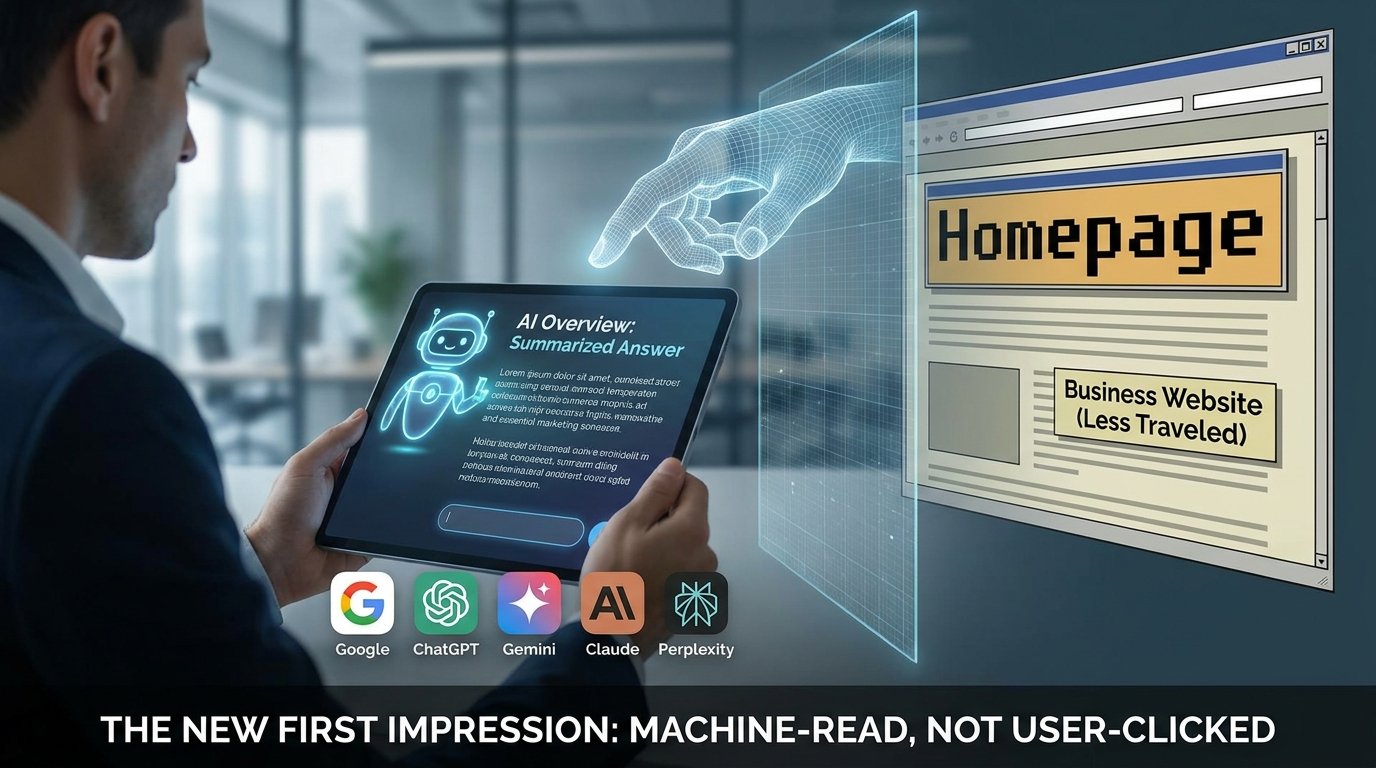
Increasingly, the answer to those questions is being summarized for them by AI before they ever click through to a business. Google's AI Overviews do it inside search itself. ChatGPT, Gemini, Claude, and Perplexity do it in conversation. The first impression of your business is now often made by a machine reading about you, not by your homepage.
That single shift is why building credibility online has stopped being a nice-to-have and become one of the most important things a business can invest in. Here is why, and what to do about it.
Key takeaways
The internet is shifting from "search and click" to "ask and get an answer," and that answer is often written by AI before anyone reaches your site.
AI systems and modern consumers both look for evidence such as reviews, ratings, profiles, and independent mentions, rather than marketing claims.
Visibility no longer lives only in Google rankings. It is spread across AI answers, review platforms, and directories.
Reviews have become a business asset that signals trust to both people and algorithms.
When two businesses look similar, credibility is usually what tips the decision.
The practical response is to build a strong, consistent, well-reviewed presence that AI and customers can find and verify.
Why businesses need to build credibility online now more than ever
1. AI systems look for evidence, not marketing claims
A business can say "we provide world-class service" on its own website all day long. The problem is that an AI summarizing the market has little reason to take that at face value. It is far more likely to weigh things it can verify from multiple sources: customer reviews, independent mentions, business profiles, ratings, and real customer experiences.
This is a quiet but enormous change. For a long time, the business with the biggest marketing budget could dominate the conversation. In a world where answers are assembled from evidence, the business with the strongest, most consistent proof often has the edge over the one simply shouting the loudest. Marketing tells your story. Evidence is what gets your story repeated by someone else, including an AI.
2. Consumers trust third-party validation
Trust has moved. Twenty years ago, a business controlled its own message almost entirely, and people largely took it as given. That is no longer how anyone behaves. Before committing to anything, people look for confirmation from sources the business does not control: reviews, industry directories, independent platforms, customer testimonials, and real-world experiences shared by other people.
The instinct now is to verify. People assume the polished version on a company's own site is the best possible spin, so they go looking for the unfiltered version elsewhere. If that unfiltered version is thin or missing, the doubt sticks.
3. Visibility is no longer just about rankings
Plenty of businesses still think the whole game is ranking number one on Google. That used to be close to true. It is not anymore, because discovery is now scattered across many surfaces at once: Google Search, Google AI Overviews, ChatGPT, Gemini, Claude, Perplexity, review platforms, and industry directories.
A customer might first hear about you inside an AI answer, then check a review site, then glance at a directory listing, then finally visit your website. If your credibility is weak at any of those stops, the journey can stall. Ranking is still useful, but it is now one entry point among many, and the businesses doing well are the ones that show up credibly wherever someone happens to be looking.
4. Reviews have become the best business asset
Reviews used to be treated as feedback, something to read, feel good or bad about, and move on. That framing is out of date. Reviews now function as an asset, in the same way a strong brand or a good location is an asset, because they demonstrate things people and AI systems both care about: customer satisfaction, service quality, trustworthiness, and overall reputation.
A business with recent, authentic reviews simply gives everyone more to work with. A potential customer gets reassurance. An AI summarizing the category gets concrete signals to cite. A business with no reviews, or a wall of stale ones from three years ago, gives both of them very little, and silence rarely reads as confidence.
5. Customers research you before they ever make contact
By the time someone fills in your form, calls you, or places an order, they have usually already made up their mind about whether you seem trustworthy. Before that first contact, many people quietly check your reviews and ratings, your photos, your business information, the quality of your website, and how recently you have been active.
In other words, you are being evaluated long before any sales conversation starts. The version of your business that lives online is doing the selling, or the losing, while you are not even in the room. That makes the state of your online presence less of a marketing detail and more of a front line.
6. Credibility is what wins when everything else is equal
Most markets are crowded with businesses offering broadly similar products at broadly similar prices. When the options look the same on paper, trust becomes the tiebreaker. Faced with a choice, people tend to pick the business that shows authentic reviews, a complete and current profile, clear information, signs of active engagement, and evidence of real experience.
None of those things are about being cheaper or flashier. They are about being more believable. Credibility is often the quiet reason one business gets chosen over another that looked, on the surface, just as capable.
7. AI is speeding up the trust economy
All of this was already happening. AI is pouring fuel on it. As these systems get better at answering questions directly, businesses get fewer chances to make a first impression through their own website, because more of the deciding happens before anyone arrives there.
The businesses that invest in credibility now, through reviews, reputation, transparent information, and strong online profiles, are building the exact signals that help customers decide with confidence and help AI represent them accurately. The ones that ignore it risk being summarized poorly, or skipped over, by systems they cannot argue with.
What this actually means you should do
Understanding the shift is one thing. Acting on it is another. A few practical moves matter more than the rest.
Start by treating reviews as something you collect on purpose, not something you wait around for. Ask every satisfied customer, make it easy for them, and keep the flow steady so your reviews always look recent and alive. A consistent trickle of authentic feedback beats an old burst of it.
Make sure your business information is complete and consistent everywhere it appears. Conflicting details across different platforms confuse both people and AI, and inconsistency itself reads as carelessness. Fill out your profiles fully, add real photos, and keep them current.
Engage rather than broadcast. Respond to reviews, including the critical ones, calmly and helpfully. Visible, fair engagement is one of the clearest trust signals there is, and it is one of the few that competitors cannot fake on your behalf.
Publish things that demonstrate real experience. Useful articles, honest case studies, and clear explanations of how you work all give people, and AI, more evidence that you know your field. This is where credibility and content meet.
And bring it together in one place you control. The harder your evidence is to find or verify, the less of it counts. A single, well-maintained home for your reviews, profile, photos, and content makes you easy to trust and easy to summarize correctly.
Where Tellacity fits
This is the bigger question Tellacity exists to help businesses answer. Not "how do I rank higher," but "how do I become a business that customers and AI can confidently choose."
Everything Tellacity offers points at that goal. Business profiles give you a complete, branded home base. Customer reviews and photo uploads build the authentic evidence people and AI look for. Articles and case studies let you demonstrate real experience and expertise. Trust signals, category presence, and ongoing reputation building tie it all together into something verifiable.
The point was never to sell you on chasing search rankings. It is to help your business build the kind of credibility that holds up no matter where someone discovers you, whether that is a Google result, an AI answer, a review platform, or a friend's recommendation.
Frequently asked questions
Is SEO dead now that AI answers questions directly? No, but its job is changing. Ranking still helps, especially since AI systems often draw on the same web content search engines do. The difference is that being findable is no longer enough on its own. You also need to be credible, because both people and AI are weighing evidence about you, not just position on a results page.
How does AI decide what to say about my business? These systems pull from what they can find and verify across the web, including reviews, ratings, profiles, mentions, and your own content. The more consistent and credible that information is, the more accurately and favorably you tend to be represented. Thin or contradictory information leaves room for a vague or unflattering summary.
What is the single most important thing to start with? Reviews. They are the clearest, most trusted form of evidence for both customers and AI, and a steady stream of recent, authentic ones does more for your credibility than almost anything else you can do quickly.
How long does it take to build online credibility? It builds gradually rather than overnight, which is exactly why starting now matters. The businesses that began collecting reviews, completing profiles, and publishing useful content early are the ones that look established today. The same will be true a year from now.
The bottom line
The internet is moving from a place you search to a place that answers. In that world, the businesses that thrive will not necessarily be the ones with the biggest marketing budgets or the cleverest taglines. They will be the ones with the strongest evidence behind them: real reviews, complete profiles, honest content, and a reputation that holds up to scrutiny from both people and machines.
Credibility has quietly become one of the most valuable assets a business can own. The good news is that it is something you can start building today.
See other related articles in this matter
Ready to build a reputation that customers and AI can trust? Get started with Tellacity and turn your credibility into your strongest advantage.
Start managing your customer reviews more effectively.
Get startedArticle attribution
Written by

Mike Smith
Marketing Director
Published by